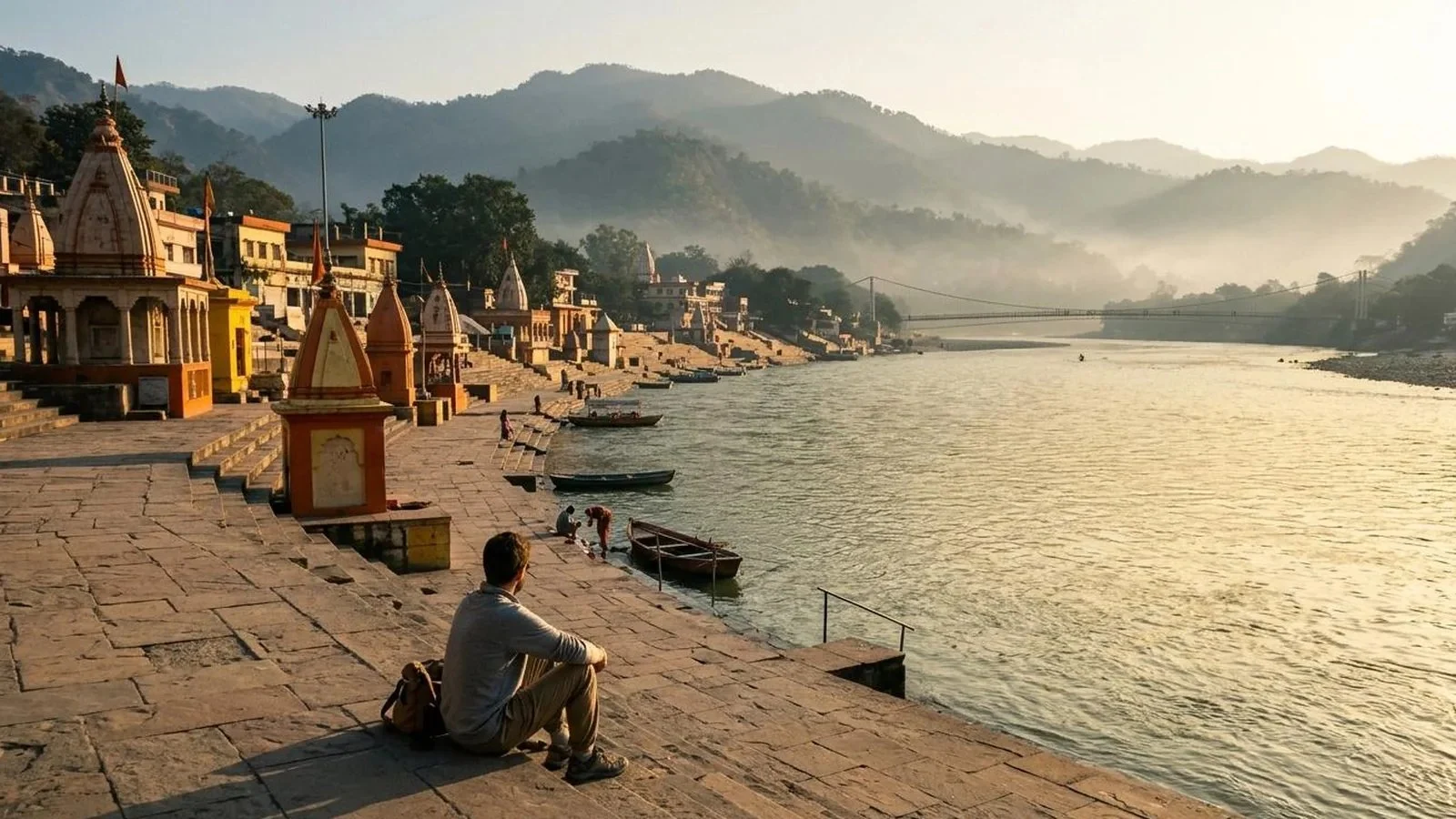
5 days in Haridwar and Rishikesh was precisely what I needed when the unrelenting noise, smog, and chaos of Delhi finally pushed me to step away from my laptop. I knew I needed an escape—not a rushed weekend trip where you spend more time navigating traffic than catching your breath, but a quick, grounded journey into the Shivalik foothills. Leaving behind the concrete expanse of the capital, I traded honking horns for the steady rhythm of temple bells, the cool mountain breeze, and the powerful current of the holy Ganga.
When planning this quick getaway, I decided to split my time into a balanced 2 days in Haridwar and 3 days in Rishikesh. Planning 5 days in Haridwar and Rishikesh gave me the perfect opportunity to balance ancient spirituality with modern mountain exploration. This specific split creates the ideal flow for a short northern India itinerary. Haridwar welcomes you with its raw devotional intensity, ancient temple heritage, and sensory overload along the ghats. Rishikesh, located just upstream where the mountains rise steeply around the river, offers a serene shift into alpine stillness, ashram culture, and adrenaline-pumping outdoor adventures. While I previously mapped out a longer 7-day Haridwar and Rishikesh cinematic guide, this streamlined 5-day loop is specifically tailored for travelers wanting a tight, deeply immersive escape from Delhi that fits neatly within a single work week or an extended long weekend.
Trip at a Glance: 5 Days in Haridwar and Rishikesh from Delhi
A well-crafted route for 5 days in Haridwar and Rishikesh allows you to experience both sacred evening rituals and exhilarating mountain adventures with complete peace of mind.
- Duration: 5 Days / 4 Nights (2 Days in Haridwar + 3 Days in Rishikesh)
- Route / Starting Point: New Delhi (NDLS / Anand Vihar) → Haridwar (HW) → Rishikesh → Delhi
- Estimated Cost: ₹8,500 – ₹15,000 per person (budget to mid-range, solo or twin-sharing)
- Best Season: October–November & February–April (pleasant days, clear river, open rafting)
- Key Highlight: Evening Ganga Aarti at Har Ki Pauri and Parmarth Niketan, plus Shivpuri white-water rafting
Table of Contents
Getting From Delhi to Haridwar and Rishikesh (Train, Bus & Road)
Planning the transit out of Delhi is blissfully straightforward because Haridwar serves as one of the best-connected gateway cities in northern India. When organizing transit for 5 days in Haridwar and Rishikesh, hopping on an early morning train from Delhi is by far the most convenient choice. If you prefer rail travel, as I often do, the early morning New Delhi – Dehradun Shatabdi Express (Train No. 12017) is hard to beat. Departing New Delhi station (NDLS) at 06:45 AM, it glides through the plains of Uttar Pradesh and brings you to Haridwar Junction (HW) by 11:35 AM—giving you a full afternoon to unpack and begin exploring. You can check current schedules and reserve seats directly via the IRCTC Official Train Booking Portal or verify transit routes with the Uttarakhand Tourism Development Board.
If you cannot take an early morning train, the Dehradun Jan Shatabdi (12055) departs at 15:20 PM and arrives at 19:27 PM. Alternatively, the sleek Vande Bharat Express (22457) leaves Anand Vihar Terminal at 17:50 PM, slicing through the distance to cover the track to Haridwar in just about 3 hours and 21 minutes. For budget travelers or late departures, overnight sleeper trains like the Mussoorie Express (14341) allow you to sleep through the journey and wake up at dawn at the foothills.
If you miss train bookings, direct Volvo and AC sleeper buses run continuously from Delhi’s Kashmiri Gate ISBT. Traveling via the smoothly paved National Highway 334 (NH-334), the drive takes anywhere between 4.5 to 6 hours depending on morning traffic exiting the National Capital Region. Having reliable transport sorted ensures that your 5 days in Haridwar and Rishikesh kicks off without unnecessary road delays.
Once you complete your stay in Haridwar, moving up to Rishikesh is incredibly easy. The two towns are separated by roughly 24 kilometers. You can board a shared auto-rickshaw (locally called a Vikram), hire a private taxi, or catch a regular Uttarakhand State Roadways bus from the main Haridwar bus stand right across from the railway station. The transit takes a brief 45 to 60 minutes, bringing you right to the riverbanks of Rishikesh.
Day 1 in Haridwar: Arrival, Old Bazaars & Har Ki Pauri Ganga Aarti
Stepping off the train at Haridwar Junction, the humid, thick air instantly hits you with the scents of burning camphor, crushed flowers, and frying jalebis. Kicking off the first morning of my 5 days in Haridwar and Rishikesh, the vibrant bazaar lanes pulled me straight toward the ghats. I checked into a modest hotel along Upper Road, just a short five-minute walk from the ghats. Settling in quickly, I spent my early afternoon wandering through the maze of Moti Bazaar. The narrow lanes are lined with vibrant shops selling brass brassware, carved wooden idols, stacks of colorful vermilion powders, and string after string of authentic rudraksha beads. Walking these ancient market streets is an essential rite of passage before approaching the water.
By mid-afternoon, I made my way down to Brahmakund at Har Ki Pauri—the precise spot where divine nectar is believed to have fallen during the Samudra Manthan. The Ganga flows past here with incredible speed and power. Lowering myself onto the submerged steps, I gripped the heavy iron safety chains tightly with both hands as I plunged into the ice-cold water. The shock of the mountain runoff instantly washes away the fatigue of city life. An hour before sunset, I secured a sitting spot along the stone steps across from the main priests’ platforms.
As dusk settled, brass bells began ringing in unison, metal gongs echoed off the hillside, and priests lifted massive, multi-tiered brass oil lamps blazing with fire. Seeing thousands of devotees chanting together while hundreds of small leaf boats (diyas) loaded with marigolds floated down the darkened river during the grand Haridwar Ganga Aarti at Har Ki Pauri is a soul-stirring experience that stays with you forever. Experiencing the evening Ganga Aarti at Har Ki Pauri was an unforgettable highlight of Day 1 during my 5 days in Haridwar and Rishikesh.
Day 2 in Haridwar: Hilltop Shakti Peeths, Kankhal & Moving Up to Rishikesh
On the second morning of my 5 days in Haridwar and Rishikesh, I woke up early to tackle Haridwar’s famous hilltop Shakti Peeth temples before the mid-day heat set in. My first stop was the Mata Mansa Devi Temple, perched high atop Bilwa Parvat. To beat the long walking lines, I purchased a combined Udankhatola ropeway ticket, which covers cable car rides for both Mansa Devi and Chandi Devi temples. The cable car lifted me swiftly above the congested town, revealing a sweeping panoramic view of the wide Ganga riverbed branching into multiple channels across the plains. Up top, I offered my prayers, tied a sacred thread around the holy tree branches, and took in the refreshing valley breeze.
Next, I crossed over to Neel Parvat via the second ropeway line to visit the Chandi Devi Temple, built by King Suchat Singh of Kashmir in 1929. The atmosphere here feels slightly wilder, surrounded by dense jungle reserves. By early afternoon, I headed back down to visit the quieter, historic suburb of Kankhal. Here sits the revered Daksheshwar Mahadev Temple, an ancient shrine dedicated to Lord Shiva that marks the mythological site of King Daksha’s great yajna. Unlike the energetic crowds of Har Ki Pauri, Kankhal’s stone courtyards and quiet ghats offer a peaceful environment for contemplation.
After a short stop at Sapt Rishi Ashram—where the river naturally splits into seven streams so as not to disturb the meditating sages—I grabbed my luggage, caught a shared electric auto, and rode up the winding forest highway toward Rishikesh, arriving just as the evening streetlights began to flicker on. Transitioning from Haridwar to Rishikesh in the afternoon marked the midpoint of my 5 days in Haridwar and Rishikesh.
Day 3 in Rishikesh: Ashrams, Suspension Bridges & Parmarth Niketan Aarti
Waking up in Tapovan on the third morning, the contrast with Haridwar was immediately obvious. Entering the alpine foothills on day three of my 5 days in Haridwar and Rishikesh brought an immediate sense of stillness. Crisp mountain air drifted down from the upper Garhwal hills, bringing a quiet morning mist over the turquoise river. I started my day with a gentle riverside walking session along the eastern bank, passing sadhus wrapped in orange robes and yoga practitioners holding poses along the smooth granite rocks. I crossed the iconic Ram Jhula bridge, feeling the iron structure gently sway beneath my feet as motorbikes and pedestrians navigated the span, and later walked across the newly constructed, wide-decked Janaki Setu.
By mid-morning, I walked through the quiet grounds of the Beatles Ashram (officially known as Chaurasi Kutia), located inside the buffer zone of Rajaji Tiger Reserve. Walking through the overgrown paths, surrounded by circular stone meditation domes and decaying residential quarters, you can feel the artistic energy that inspired the Beatles to compose dozens of songs here in 1968. The central hall, adorned with colorful psychedelic graffiti murals, is a paradise for photography and quiet reflection.
As the late afternoon sun cast long shadows over the river, I walked over to attend the famous Parmarth Niketan Ganga Aarti in Rishikesh. Unlike the intensely ritualistic and crowded ceremony in Haridwar, the evening service at Parmarth Niketan is led by ashram gurukuls who sing gentle, melodic bhajans accompanied by harmoniums and tabla. Sitting right on the water’s edge in front of the massive white Lord Shiva statue, watching the sunset cast golden hues across the water, felt deeply meditative and restorative. Sitting by the river during the Parmarth Niketan aarti felt like the spiritual heart of spending 5 days in Haridwar and Rishikesh. For those interested in extending their journey further into the higher Garhwal Himalayas, this region also serves as the spiritual springboard for the Kedarnath trek and yatra guide and the ancient sacred shrines of the Sapta Badri spiritual journey.
Day 4 in Rishikesh: White-Water Rafting, Neer Garh Waterfall & Tapovan Cafes
Day four was reserved entirely for adventure and exploration. White-water rafting through the rapids of Shivpuri injected high-octane energy into my 5 days in Haridwar and Rishikesh. I reported early in the morning to an accredited raft desk in Tapovan for my white-water rafting run from Shivpuri down to Nim Beach. This classic 16-kilometer stretch packs an incredible punch, featuring exhilarating Grade II and Grade III rapids known locally as Roller Coaster, Golf Course, and Club House. Splashing through icy, churning waves surrounded by towering forest cliffs provided an unforgettable rush of pure adrenaline. It is worth remembering that under Uttarakhand Tourism’s river rafting guidelines, the commercial rafting season runs strictly from late September to June, shutting down entirely during the heavy monsoon months of July and August for visitor safety.
After changing into dry clothes and enjoying a hot cup of lemon-ginger tea, I hired a local scooty and drove up the Badrinath road to the trailhead for Neer Garh Waterfall. A short, twenty-minute hike along a rocky forest track brings you to a series of cascading turquoise pools tucked into the jungle canopy. Taking off my shoes to dip my tired feet into the cold mountain water was refreshing after the morning’s rafting effort.
I spent the rest of my late afternoon and evening unwinding at one of Tapovan’s Bohemian rooftop cafes. Perched high above the river with a book in hand, watching the white rafts float by on the emerald green Ganga below while soft music played in the background, was one of the most peaceful afternoons of my 5 days in Haridwar and Rishikesh, offering the ultimate way to decompress before heading back home.
Day 5 in Rishikesh: Triveni Ghat Sunrise, Vashishta Cave & Return to Delhi
On my final morning, I woke up before dawn to witness sunrise at Triveni Ghat in old Rishikesh town. Beginning the final morning of my 5 days in Haridwar and Rishikesh with dawn meditation at Triveni Ghat offered complete clarity. This is the sacred confluence of three underground rivers—Ganga, Yamuna, and Saraswati. At 06:00 AM, the ghat is remarkably quiet. Local elders take their morning dips, soft chants fill the air, and flocks of pigeons sweep low over the mirror-like water. Watching the sun rise over the mountains, casting bright silver rays across the riverbed, was a serene, spiritual moment.
With a few hours left before my evening transit, I took an optional morning drive 25 kilometers upstream along the scenic highway to Vashishta Guha (Vashishta Cave). Maintained by a peaceful ashram, this ancient natural cave carved into the rock face is where Sage Vashishta is believed to have meditated. Walking deep inside the pitch-black, cool interior of the cave to sit in total, unbroken silence for thirty minutes was one of the most intense and calm experiences of the entire 5 days in Haridwar and Rishikesh.
Heading back to town by early afternoon, I collected a small tin of prasad and a set of prayer beads from local vendors, checked out of my hotel, and made my way to Yog Nagari Rishikesh railway station to catch my evening return train back to Delhi, fully refreshed and mentally reset after an unforgettable 5 days in Haridwar and Rishikesh.
Best Season and Month to Visit Haridwar and Rishikesh
Timing your trip carefully ensures you get the absolute best weather and activity availability for your 5-day itinerary. Choosing the right time of year for your 5 days in Haridwar and Rishikesh guarantees ideal river temperatures and comfortable temple visits. Here is a clear breakdown of what to expect throughout the year:
October to November (Best Overall): This is the golden window. Autumn offers the crispest weather for anyone taking 5 days in Haridwar and Rishikesh to balance rafting and heritage walking. The monsoon rains have cleared, the atmosphere is crisp, and daytime temperatures hover comfortably between 15°C and 28°C. The river water runs a clean, emerald green color, rafting operations are fully open, and evening outdoor aartis are incredibly pleasant.
February to April (Spring & Yoga Season): Spring brings brilliant weather, blooming hillsides, and comfortable sunshine. Temperatures range from 18°C to 30°C. March is particularly vibrant due to the International Yoga Festival in Rishikesh and festive celebrations across northern India—much like the incredible cultural atmosphere I experienced during Mathura Holi 2026.
May to June (Summer Peak): Expect high heat during the day, with temperatures reaching 38°C to 40°C in Haridwar. Rishikesh stays slightly cooler due to valley breezes. This period sees heavy pilgrim traffic due to the commencement of the Char Dham Yatra. Early morning temple visits and evening river dips are essential to avoid the afternoon sun.
July to September (Monsoon – Rafting Closed): Heavy rainfall in the Himalayas causes the Ganga to swell into a torrential muddy brown flow. Water sports are strictly suspended. However, lush green hills and budget-friendly ashram stays attract budget travelers who prefer solitary retreats and rainy forest walks over water adventures.
Food to Try in Haridwar and Rishikesh (Pure Veg Trail)
Both Haridwar and Rishikesh are designated holy cities, meaning meat and alcohol are strictly prohibited by law within city limits. Far from being a limitation, this strict vegetarian policy has created one of the richest, most satisfying street food and cafe cultures in India. Tasting pure vegetarian culinary specialties across both holy cities adds delicious authentic flavor to 5 days in Haridwar and Rishikesh. If you love discovering meat-free meals like I do on my trips, explore my Global Vegetarian food guide for tips on finding authentic vegetarian meals worldwide.
In Haridwar, food is rich, heritage-driven, and cooked in pure ghee. You cannot miss the iconic breakfast at Mohan Ji Puri Wale near Har Ki Pauri, serving blistered, golden bedmi pooris alongside spicy, tangy aloo curry and pumpkin sabzi. To sweeten your palate, stop by Mathura Walo Ki Prachin Dukaan for thick, creamy kulhad doodh topped with malai and piping-hot, crispy jalebis. For lunch, step into Chotiwala for a full North Indian thali served with generous dollops of butter.
In Rishikesh, the culinary scene transitions dramatically from heritage street foods to international, health-conscious vegetarian fare. The cafes of Tapovan and Lakshman Jhula serve organic smoothie bowls, sourdough toasts, wood-fired thin-crust pizzas, and herbal teas. Must-visit spots include Little Buddha Cafe with its open-air wooden balcony overlooking the river, Beatles Cafe for wholesome vegan burgers, and German Bakery for fresh apple crumble pastries. Exploring traditional sweets and organic cafe menus keeps energy high throughout 5 days in Haridwar and Rishikesh.
Things to Carry: My Practical Packing Checklist
Packing smart makes your transitions between ancient temples, river ghats, and mountain trails completely hassle-free. Packing lightweight, versatile gear ensures you stay comfortable across all terrains during 5 days in Haridwar and Rishikesh. Preparing these essential items will make your 5 days in Haridwar and Rishikesh seamless from the moment you board in Delhi. Here is what I brought in my backpack:
- Footwear: One pair of sturdy walking shoes for city walking and temple staircases, plus high-grip water sandals or strap-on sandals for river dipping and rafting.
- Quick-Dry Clothing: Synthetic shorts or quick-dry trousers for rafting, along with light, breathable cotton tops for daytime sightseeing.
- Modest Temple Attire: Lightweight pants, long skirts, or scarves to ensure shoulders and knees are fully covered when entering traditional temples and ashram grounds.
- Layering Gear: A light fleece or windcheater jacket. Even during spring and autumn, cool winds coming off the Ganga make evenings by the river chilly.
- Dry Bag & Waterproof Pouch: A sealed waterproof phone pouch with a neck strap is vital for capturing rafting photos without risking water damage to your phone.
- Microfiber Towel: Essential for quick drying after taking dips at Har Ki Pauri or swimming under Neer Garh Waterfall.
- Power Bank: Taking photos, recording 4K video clips, and using navigation will drain your phone battery quickly throughout long days.
Actionable Traveler Tips for a Smooth Trip
Following these practical on-ground recommendations will help you avoid rookie mistakes during your 5 days in Haridwar and Rishikesh:
- Arrive 60 Minutes Early for Aarti: Seating at Har Ki Pauri fills up fast. Arrive by 05:00 PM in winter or 06:00 PM in summer to grab a clear, comfortable spot right by the water.
- Verify Rafting Licenses: Book your white-water rafting run only with certified operators licensed by Uttarakhand Tourism who provide certified life jackets and expert river guides.
- Beware of Shoe-Deposit Scams: Use the free official shoe stands near temple entrances rather than handing your footwear to aggressive private vendor stalls along the path.
- Keep Cash Ready for Autos: UPI digital payments often drop out in crowded bazaars or high mountain spots. Keep crisp small cash bills in your pocket for hassle-free travel.
- Respect River Safety Rules: The Ganga has extremely strong, deceptive underwater currents. Always use the safety chains and iron railings provided at Har Ki Pauri and Triveni Ghat.
- Avoid Single-Use Plastics: Carry a sturdy, reusable water bottle. Uttarakhand enforcement strictly penalizes single-use plastic bags and bottles around holy ghats.
Frequently Asked Questions
Are 5 days enough for Haridwar and Rishikesh from Delhi?
Yes, allocating 5 days in Haridwar and Rishikesh allows for a relaxed 2+3 day split that covers both heritage ghats and mountain adventures. Two full days in Haridwar give you ample time for the hilltop ropeways and Har Ki Pauri Aarti, while three days in Rishikesh let you enjoy ashrams, cafes, and white-water rafting without rush.
What is the best month to visit Haridwar and Rishikesh for both Ganga Aarti and rafting?
October, November, March, and April offer the absolute best conditions for 5 days in Haridwar and Rishikesh. During these months, the weather is pleasant, river water is clear and emerald-green, and white-water rafting operations are fully open.
How much does a 5-day Haridwar and Rishikesh trip from Delhi cost?
A budget of ₹8,500 to ₹15,000 per person comfortably covers a complete 5 days in Haridwar and Rishikesh including train tickets, lodging, meals, and rafting. This covers round-trip Shatabdi trains, clean hotel or ashram stays, all meals, local auto transit, and a 16 km Shivpuri rafting trip.
Should I stay in Haridwar or Rishikesh, or split my stay?
You should definitely split your stay. Staying 2 nights in Haridwar puts you close to morning temple circuits and Har Ki Pauri Aarti, while 2 or 3 nights in Rishikesh (specifically Tapovan or Swargashram) lets you enjoy ashram culture, cafes, and river sports.
Is river rafting open throughout the year in Rishikesh?
No. Commercial white-water rafting in Rishikesh is closed during the monsoon season (July through August and early September) under Uttarakhand Tourism safety regulations. It reopens reliably from late September through June.
Personal Reflection & Parting Thoughts
As my return train pulled out of the station and accelerated into the dark plains toward Delhi, I felt a deep sense of calm that had completely eluded me a few days prior. Spending 5 days in Haridwar and Rishikesh is far more than a simple sightseeing journey; it is a refreshing reset for both mind and body. The stark, beautiful contrast between Haridwar’s raw devotional power and Rishikesh’s quiet, mountain-bound tranquility creates a wonderful rhythm that leaves you feeling grounded and inspired.
Taking 5 days in Haridwar and Rishikesh gave me the mental clarity I had been missing in the capital, proving that a short escape can create lasting change. Whether you find yourself standing among thousands of devotees bathed in the golden fire light of Har Ki Pauri, dipping your paddle into the churning rapids of the Ganga, or simply sitting in silent reflection inside the ancient stone depths of Vashishta Guha, this quick 5-day escape offers everything you need to recharge your spirit. If you feel weighed down by the pace of modern city life, book that train ticket out of Delhi—the holy river and the mountains are waiting to welcome you.

